
Robotics Barcelinhos
Document register
- Poster59 KBPublished
- Presentation videoYouTubePublished
- Bill of materials23 KBPublished
- Team description paperNot shared
- Engineering journalNot shared
- Source code19 KB · GitHubPublished
Sharing each document is the team's decision. “Not shared” means this team chose not to publish it, or did not submit one — not that it is missing from the archive.
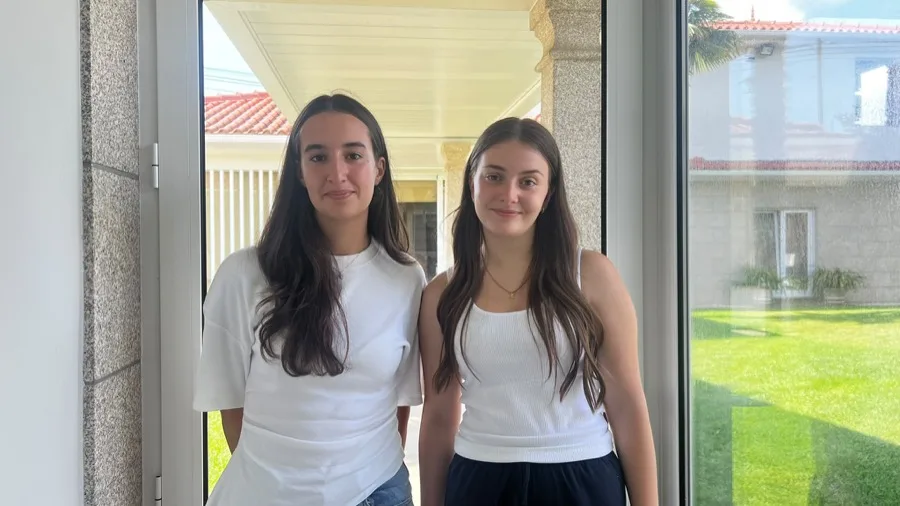
In their words
Team Barcelinhos' entry for RoboCup Junior Rescue Simulation 2026, running on the Erebus/Webots platform. The robot autonomously navigates unknown maze environments, detects and reports victims and cognitive targets (hazmat signs), avoids floor holes, and submits a 2D occupancy map to the game supervisor.
The software stack is implemented in Python 3 across three collaborating modules, an Extended Kalman Filter (EKF) for pose estimation, a log-odds occupancy grid for persistent environment mapping, and a main controller integrating reactive navigation, victim identification, and hole avoidance without any external robotics library. All 3×3 matrix operations required by the EKF are implemented by hand, keeping the codebase fully self-contained.
Navigation uses a four-level priority chain (wall stop, lateral push, steer-while-advance, heading-locked forward) evaluated every 32 ms timestep. A triple anti-stuck system with three independent detectors (GPS-based, encoder-based, and spinning detection) and an adaptive escape routine prevent the robot from being trapped in corners or cyclic patterns. Cognitive targets are identified by sampling five concentric colour rings; letter victims are distinguished by region-based dark-pixel density scores. Duplicate detections are suppressed by an 8.3 cm grid keyed to the KF position estimate. The entire controller runs under 800 lines of source code.
Poster
Shown as the original PDF, because this one is smaller that way and its text stays selectable and searchable.
Presentation video
Hosted on YouTube. The player loads only when you press play.
Bill of materials
Shown as the original PDF, because this one is smaller that way and its text stays selectable and searchable.
Source code
The team's own source code, 19 KB. It is a download rather than part of this page, because a zip is something you open on your computer. It comes from GitHub, which some school networks block.