
Stenbackens Gård Robotik
Document register
- Poster1 pagePublished
- Presentation videoYouTubePublished
- Bill of materials87 KBPublished
- Team description paperNot shared
- Engineering journalNot shared
- Source codeNot shared
Sharing each document is the team's decision. “Not shared” means this team chose not to publish it, or did not submit one — not that it is missing from the archive.
In their words
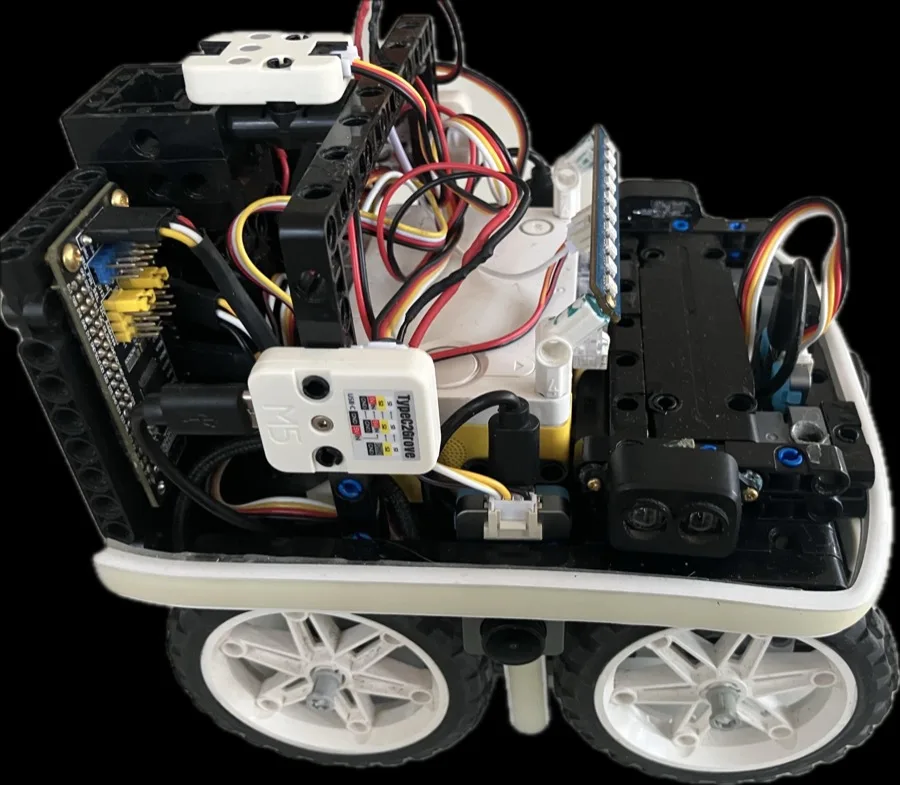
Our robot is designed as an autonomous system optimized for navigation in complex maze environments. Its core architecture combines computer vision, sensor fusion and a robust decision‑making pipeline to ensure consistent performance under induced white stable lighting.
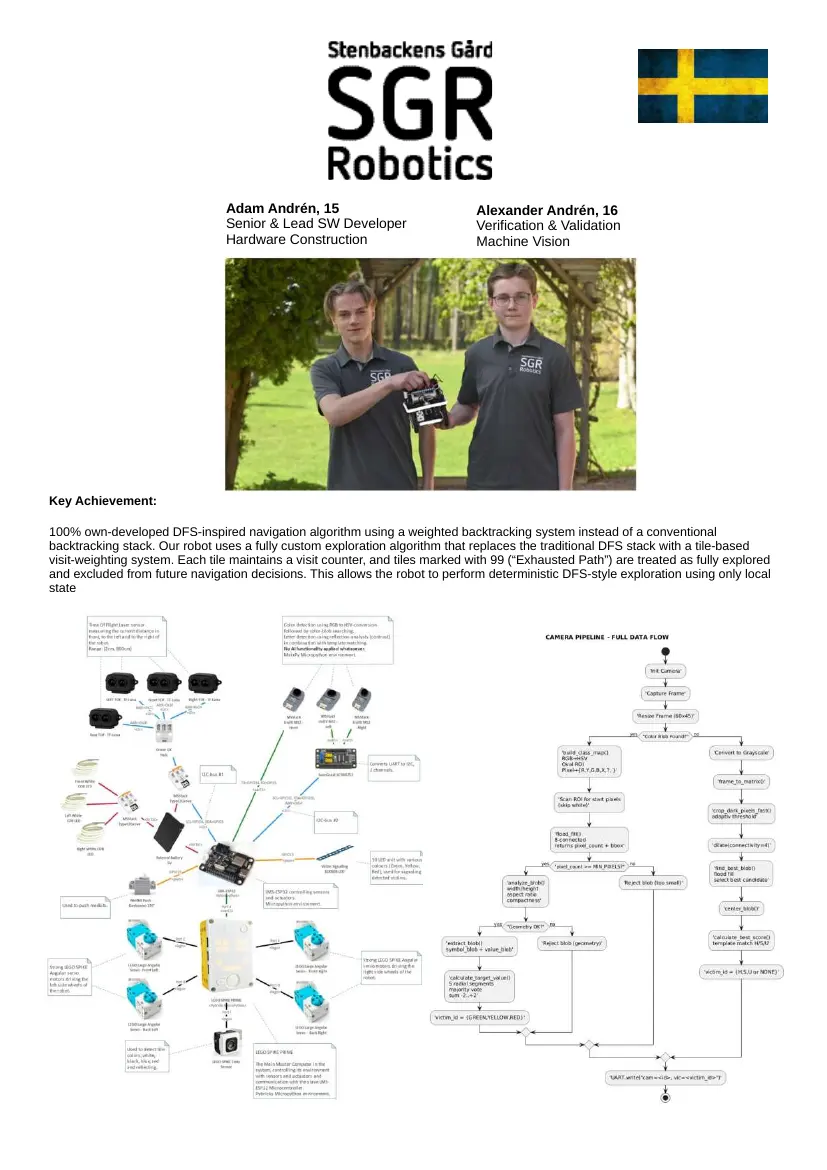
The vision system uses HSV‑based color segmentation, template matching and image filtering to detect victims with precision.
Distance calculation are integrated into the environment perception loop, enabling the robot to evaluate obstacles and passage paths in a reliable manner.
Navigation is handled through a weighted depth‑first search algorithm adapted for dynamic environments. This allows the robot to prioritize unexplored paths while continuously updating its internal grid‑based map.
The robot’s control system is built around a hybrid architecture where a LEGO Hub performs motor control, while a secondary processor handles I2C sensor fusion and communication with the M5Stack UnitV cameras.
What sets our robot apart is the combination of deterministic behavior, modular environment sensing, and a perception pipeline tuned specifically for reliability rather than brute‑force computation. The result is a system that is quite modular and efficient and also remains predictable and possible to debug even under harsh environmental constraints.
Poster
Read the text of this document — 92 words
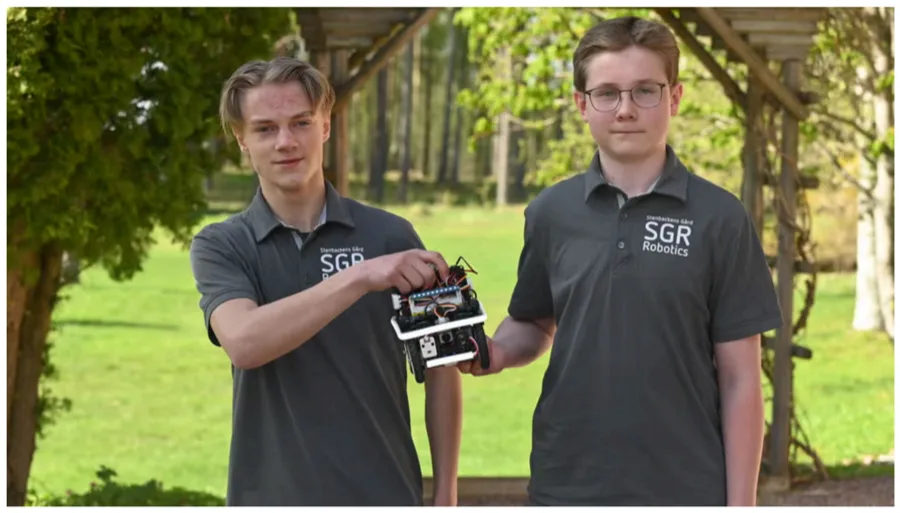
Adam Andrén, 15                                Alexander Andrén, 16
                                Senior & Lead SW Developer                     Verification & Validation
                                Hardware Construction                          Machine Vision

Key Achievement:

100% own‑developed DFS‑inspired navigation algorithm using a weighted backtracking system instead of a conventional
backtracking stack. Our robot uses a fully custom exploration algorithm that replaces the traditional DFS stack with a tile‑based
visit‑weighting system. Each tile maintains a visit counter, and tiles marked with 99 (“Exhausted Path”) are treated as fully explored
and excluded from future navigation decisions. This allows the robot to perform deterministic DFS‑style exploration using only local
state
1 page, rendered as images so they load quickly. The text above is the document's own, extracted from the PDF.
Presentation video
Hosted on YouTube. The player loads only when you press play.
Bill of materials
Shown as the original PDF, because this one is smaller that way and its text stays selectable and searchable.